Pico Laser Treatment in Delhi for Pigmentation and Skin Rejuvenation
Concerned about stubborn dark spots, uneven skin tone, acne marks or pigmentation that has not improved with regular skincare? Pico laser treatment uses ultra-short pulses of laser energy to target selected pigmentation concerns and certain tattoo pigments. Its suitability depends on your skin condition, skin type and the device used.
At Dermatales, Patel Nagar, New Delhi, Dr. Pooja Varshney, an MBBS, MD (Dermatology) specialist with a Fellowship in Cosmetology, has been practising since 2015, with expertise in dermatology and aesthetic treatments. A personalised consultation can help determine whether Pico laser, another laser procedure or medical skincare is appropriate for your concern.
If you are considering Pico laser treatment in Delhi, understanding the potential benefits, limitations, risks, number of sessions and overall cost can help you make an informed treatment decision.

What Is Pico Laser Treatment?
Pico laser treatment uses picosecond laser pulses, measured in trillionths of a second, to deliver energy to a selected skin target. Depending on the device, wavelength and treatment settings, this energy can help break down pigment particles or create a controlled effect within the skin.
The technology is used for selected concerns such as certain pigmented lesions and tattoo ink. Some devices also have specific indications for particular skin-rejuvenation concerns. However, not every Pico laser has the same capabilities, and the treatment is not suitable for every type of pigmentation, acne scar or uneven skin tone.
Unlike treatments that rely mainly on prolonged heating, picosecond pulses deliver energy over an extremely short duration. This does not mean that the procedure is completely painless, risk-free or automatically better than every other laser.
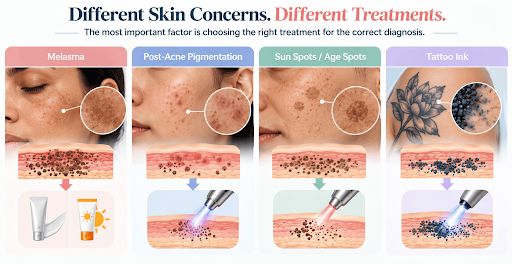
The most important factor is choosing the right treatment for the correct diagnosis. Brown patches caused by melasma, post-acne pigmentation, sun spots and tattoo ink are different problems and may require different treatment strategies.
Picosecond Precision
Pulses measured in trillionths of a second deliver energy rapidly with photoacoustic pressure, shattering pigment with minimal excess thermal spread.
Selective Targeting
Accurately fragments stubborn melanin clusters and dense tattoo pigments into microscopic particles that the body gradually clears.
Lower Thermal Burden
By minimizing heat retention in surrounding tissue, picosecond pulses help reduce the risk of post-inflammatory hyperpigmentation on Indian skin tones.
What Skin Concerns Can Pico Laser Address?
The suitability of Pico laser depends on the device's wavelength, handpiece, settings and clinical indication. During a dermatological assessment, the clinician should determine whether the concern is appropriate for this technology or whether another treatment would be more suitable.
1. Selected Pigmentation and Dark Spots
Solar Lentigines & FrecklesCertain well-defined pigmented spots may respond to laser treatment when the diagnosis and device indication are appropriate. However, pigmentation can occur at different depths, and not all brown or grey patches have the same cause.
If you have persistent facial pigmentation, the first step is to distinguish conditions such as sun spots, freckles, post-inflammatory hyperpigmentation and melasma. Treating the wrong type of pigmentation with an unsuitable laser may lead to irritation, worsening pigmentation or an unsatisfactory result.
2. Post-Acne Marks and Uneven Skin Tone
Post-Inflammatory HyperpigmentationDark marks left after acne are often caused by post-inflammatory hyperpigmentation rather than active acne scars. In selected cases, a laser may form part of the treatment plan, but controlling ongoing acne and reducing inflammation are equally important.
If you have depressed acne scars, enlarged pores or uneven skin texture, a pigment-targeting treatment alone may not address the underlying structural changes. Your dermatologist may discuss other options depending on the scar type.
3. Melasma and Recurrent Facial Pigmentation
Hormonal & Vascular TriggersMelasma commonly causes brown or grey-brown patches on the cheeks, forehead, upper lip or other parts of the face. It can be influenced by sunlight, visible light, hormones and individual predisposition.
Laser treatment is not automatically the first choice for melasma. In some patients, an unsuitable procedure can trigger inflammation and worsen pigmentation. A dermatologist may recommend topical treatment, photoprotection and other options before considering a laser.
4. Selected Tattoo Pigments
Dark & Multi-Colour InksPicosecond lasers can be used for selected tattoo-removal or tattoo-lightening indications, depending on the wavelength, ink colour and device. Dark inks may respond differently from green, blue, red, yellow, white or flesh-coloured pigments.
Complete tattoo removal cannot be guaranteed. Multiple sessions are often required, and residual pigment or changes in skin colour may remain. Some cosmetic tattoo pigments can also change colour after laser exposure.
5. Selected Skin Texture and Rejuvenation Concerns
Fractional Micro-Lens ArraysCertain picosecond laser systems have fractional or specialised handpieces designed for particular skin-texture or rejuvenation indications. Their suitability depends on the device, the condition being treated and the patient's skin characteristics.
Fine lines, deeper acne scars, enlarged pores and loose skin do not all respond in the same way. A dermatologist should explain what the proposed device is designed to address and whether another procedure may offer a more appropriate approach.
Diagnosis Precedes Device Selection
At DermaTales Patel Nagar, our primary commitment is accuracy in diagnosis. Laser treatment is only recommended after thoroughly confirming whether your dark patches are epidermal, dermal, post-inflammatory, or mixed melasma.
How Does Pico Laser Work?
The treatment works by delivering brief pulses of laser energy to a specific target. Depending on the indication and device, the energy can fragment pigment particles or create controlled effects within the skin.
The body gradually clears the affected pigment, while the skin heals following the procedure. The extent and timing of visible change depend on the target, treatment settings and individual response.
A typical appointment involves the following stages:
Step 1: Skin Assessment
Your dermatologist examines the area, reviews your medical history and identifies the type of pigmentation, tattoo pigment or texture concern.
Step 2: Treatment Planning
The clinician determines whether the available device is appropriate, selects the relevant settings and explains expected outcomes, risks and alternatives.
Step 3: Skin Preparation
The treatment area is prepared according to the device protocol. Protective eyewear is essential for the patient and treatment team.
Step 4: Laser Procedure
Short pulses are delivered to the selected area. You may experience a snapping sensation, warmth or temporary discomfort. The sensation varies with the treatment and individual sensitivity.
Step 5: Aftercare and Review
The clinician explains how to care for the skin, protect it from sunlight and recognise symptoms that need medical attention. Further sessions should be planned according to the response and healing of the skin.
Is Pico Laser Suitable for Indian Skin Tones?
People with Indian skin tones can be more prone to post-inflammatory hyperpigmentation after skin irritation or injury. This is particularly important when considering procedures that affect pigment or create controlled skin injury.
A Pico laser may be suitable for selected patients, but safety depends on the diagnosis, skin type, treatment settings, wavelength and operator expertise. No laser should be described as universally safe for every skin tone or pigmentation condition.
Before Proceeding, Ask Your Dermatologist:
The aim is to choose an approach that balances potential benefit with the risk of irritation, burns, scarring or changes in skin colour.
Who Is a Suitable Candidate for Pico Laser Treatment?
You may be a suitable candidate if:
- You have a diagnosed pigmentation concern or another skin condition that may respond to the specific picosecond laser being used.
- Your dermatologist confirms that the potential benefits outweigh the risks.
- You can follow the recommended pre-treatment and aftercare instructions, including sun protection and prescribed skincare.
When treatment may need to be postponed:
- Active skin infection, irritation or inflammation in the treatment area.
- Recent tanning or sun exposure that increases the risk of complications.
- A history of poor wound healing or keloid scarring.
- Recent cosmetic procedures that may affect skin recovery.
- A history of cold sores, pregnancy or medications that may influence healing or treatment safety.
Your dermatologist will determine whether treatment should be postponed or avoided based on your medical history, skin condition and the device-specific protocol.
Crucial Clinical Safety Precaution
Important: Do not undergo cosmetic laser treatment on an unexplained, changing, irregular or bleeding pigmented spot without first having it medically assessed.
What Results Can You Expect?
Results vary with the condition being treated. Some superficial pigmented spots may respond more readily than deeper or recurrent pigmentation. Tattoo ink may fade gradually over multiple sessions, while textural concerns may need a different treatment strategy.
Pico laser does not guarantee perfectly even skin tone, complete pigment removal or permanent prevention of recurrence. Pigmentation may return if its underlying triggers persist, particularly in conditions such as melasma.
The clinician should explain what a realistic outcome looks like for your specific concern and when it should be assessed. Photographs taken under consistent lighting can help document changes, but photographs alone cannot guarantee the result another patient will experience.
Pico Laser Before and After: What Should You Know?
When reviewing Pico laser before and after photographs, look for images of patients with a similar concern, skin tone and treatment indication. Check whether the images show the number of sessions, the interval between treatments and any other procedures used.
Lighting, camera settings, makeup, skin preparation and image editing can make a significant difference to how the skin appears. Before-and-after photographs should be genuine, used with appropriate consent and presented without misleading alterations.
Ask whether the examples represent a typical response or an individual result. A photograph showing improvement after several sessions should not be interpreted as a guarantee that you will achieve the same outcome after one appointment.
How Many Pico Laser Sessions Are Needed?
There is no universal session count for every Pico laser indication. The number of treatments depends on the diagnosis, pigment depth, ink colour and density, device settings, treatment area and how your skin responds.
A selected superficial pigment spot may need a different plan from melasma, post-acne pigmentation or a multicoloured tattoo. Textural concerns may also require a different schedule from pigment-targeting procedures.
Sessions should be spaced according to the treatment protocol and the time required for the skin to heal. Additional treatment should be recommended only after the response has been reviewed.
Before booking a package, ask how many sessions are initially anticipated, what will determine whether further sessions are appropriate and whether follow-up appointments are included in the quoted cost.
Pico Laser Treatment Cost in Delhi
The Pico laser treatment cost in Delhi starts at approximately ₹6,000 per session, depending on the treatment area, skin concern and laser technology used. A small pigmented spot may require a different approach from full-face pigmentation treatment or tattoo removal, where ink colour, size, depth and previous treatments can also affect the cost.
At Dermatales, Patel Nagar, the final treatment estimate should be confirmed after a skin assessment, including the recommended number of sessions and any additional treatment requirements. Contact the clinic for current pricing before booking.
Transparent Pricing at DermaTales Patel Nagar
Before Accepting a Quotation, Confirm:
Dermatales should provide an individual estimate after assessing the concern and confirming the treatment available. A single price should not be assumed to apply to every patient.
Side Effects and Safety Considerations
Pico laser treatment may cause temporary side effects, depending on the treatment area, laser settings and individual skin response.
Common Side Effects:
- Temporary redness, swelling or tenderness.
- Pinpoint bleeding or crusting after certain procedures.
- Temporary darkening or lightening of the skin.
Potential Risks and Complications:
- Burns, blistering or infection.
- Scarring or persistent changes in skin colour.
- Worsening of certain pigmentation conditions if treatment is unsuitable.
- Incomplete tattoo removal or residual pigment.
- Darkening of certain cosmetic tattoo pigments after laser exposure.
- Possible allergic reactions to tattoo pigments requiring medical assessment.
When to Seek Medical Advice:
- Severe or increasing pain.
- Extensive blistering or signs of infection.
- Unexpected skin changes or reactions that are not improving.
How to Prepare for Pico Laser Treatment
Preparation depends on the indication and the device. During your consultation, disclose your medical history, previous laser treatments, skincare products, medicines, tendency to develop pigmentation or scars, and any history of cold sores. Your clinician may advise you to avoid tanning, use sun protection and temporarily stop selected irritating skincare products. Do not stop prescribed medicines or begin bleaching agents without medical advice.
Arrive with the treatment area clean if instructed, and follow the clinic's guidance regarding makeup and topical products. Ask whether numbing cream is needed and how long you should allow for the appointment and recovery.
Aftercare: Protecting Your Skin After Laser Treatment
Aftercare helps support healing and reduces the chance of avoidable irritation. Use gentle skincare and follow the clinician's instructions regarding moisturisers, cleansing and sun protection. Avoid picking crusts, scratching the treated area or using strong exfoliants until the skin has recovered and your clinician advises that they can be restarted.
Avoid unnecessary sun exposure and use a broad-spectrum sunscreen as recommended. If you develop blistering, increasing pain, unusual swelling or signs of infection, seek clinical advice promptly.
The skin may need time to settle before the result can be evaluated. Do not schedule additional treatment simply because the desired change is not visible immediately.
Pico Laser vs Other Pigmentation Treatments
Pico laser is one of several possible options, not a universal replacement for other treatments.
Pico Laser
PicosecondMay be considered for selected pigmented lesions, tattoo pigments and specific device-approved rejuvenation indications.
Q-Switched Laser
NanosecondUses a different pulse duration and may be appropriate for certain pigment and tattoo indications. The choice depends on the diagnosis and the specific laser system.
Chemical Peels
Surface ExfoliationCan help selected pigmentation and surface-level concerns by promoting controlled exfoliation. The formulation and depth must be chosen carefully, especially in skin prone to post-inflammatory pigmentation.
Prescription Skincare
Medical TopicalsMay be appropriate for melasma, post-acne pigmentation and other conditions where controlling inflammation and melanin production is important.
Microneedling or Fractional Resurfacing
Collagen RemodellingMay be considered for selected texture and scar concerns rather than pigment alone, depending on the diagnosis.
The best treatment is the one that matches the cause of your concern and your skin's needs. Combining procedures is not automatically more effective and may increase irritation or downtime if poorly planned.
Why Consider Dermatales for a Pico Laser Consultation in Patel Nagar?
Dermatales provides dermatology and aesthetic services at its Delhi clinic in Patel Nagar. Dr. Pooja Varshney holds MBBS and MD qualifications in Dermatology and has a Fellowship in Cosmetology, with over 10 years of clinical experience. A consultation-led approach is important when choosing a laser procedure because pigmentation, acne marks, melasma and tattoo ink need different treatment strategies.
Your assessment should cover the cause of the concern, the suitability of the specific device, realistic outcomes, the possibility of recurrence, potential complications and the overall cost. You should also be able to discuss non-laser alternatives where appropriate.
Before booking a Pico laser procedure, contact Dermatales to confirm that the specific picosecond laser device and indication you need are currently available at the Patel Nagar clinic. Do not assume that every laser technology or handpiece is offered at every location.
Looking for Pico Laser Treatment Near Me?
If you are searching for Pico laser treatment near me, consider more than the distance to the clinic. The clinician's assessment, the suitability of the device, safety protocols, transparent pricing and access to follow-up are important parts of the decision.
Dermatales is located in Patel Nagar, New Delhi. You can contact the clinic on +91 87005 30623 to enquire about consultation availability, the treatment technology offered for your concern and the estimated cost.
The clinic's published hours are Monday to Saturday, 11 AM to 8 PM; confirm availability before visiting. A consultation can help you understand whether a Pico laser, another laser, medical skincare or a different treatment approach is most appropriate.
Book a Dermatology Consultation at Dermatales
Persistent pigmentation, dark spots and uneven skin texture can have different causes, so choosing a laser without a diagnosis may lead to disappointing results or unnecessary risks.
At Dermatales, Patel Nagar, New Delhi, Dr. Pooja Varshney can assess your skin concern and discuss suitable treatment options. Contact the clinic to confirm Pico laser availability, understand the proposed treatment plan and receive an individual cost estimate before proceeding.
Medical Disclaimer
Medical disclaimer: This page provides general educational information and does not replace a medical consultation, diagnosis or personalised treatment advice.
Frequently Asked Questions

Dr. Pooja Varshney
Fellowship in Cosmetology with 10+ years of clinical expertise in dermatology and advanced cosmetic treatments.
Know MoreNeed immediate assistance?
WhatsApp Us