What is MNRF (Microneedling Radiofrequency)?
MNRF stands for Micro-Needling Radiofrequency. It is an advanced form of microneedling treatment that pairs fine needles with radiofrequency (RF) energy delivered directly into the dermis, the deeper structural layer of the skin. Standard mechanical microneedling works by creating controlled micro-injuries that trigger the skin's own wound-healing response.
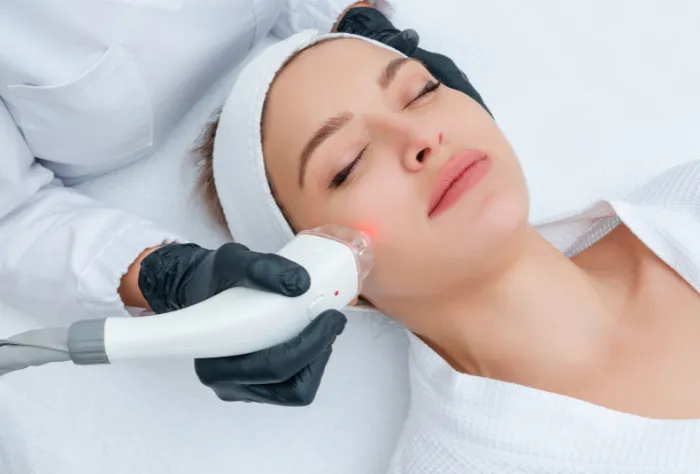
MNRF adds a second mechanism: as the needles reach a pre-set depth, RF current heats a small, controlled zone of tissue around the needle tips, which further stimulates fibroblasts, the cells responsible for producing collagen and elastin. This dual mechanical-and-thermal effect is why MNRF is generally considered more suited to deeper concerns, such as textural acne scarring and early skin laxity, compared to needling alone.
Microneedling Treatment in Gurgaon for Acne Scars & Skin Tightening
If acne scars, enlarged pores, or early skin sagging have made you consider a more advanced option than basic skincare, you have likely come across MNRF as a possible next step. Also referred to as RF microneedling, this is one of the more technically involved forms of microneedling treatment in Gurgaon, combining mechanical needling with heat energy to work on the deeper layers of the skin rather than the surface alone.
Because it uses both needles and radiofrequency current, correct depth, energy settings, and patient selection genuinely matter, which is why this treatment is recommended to be approached with a dermatologist rather than a technician-led aesthetic centre.
How Does MNRF Work on the Skin?
MNRF combines microneedling with radiofrequency (RF) energy to stimulate the deeper layers of the skin:
Microneedles penetrate the skin
Fine needles reach a dermatologist-selected depth based on the treatment area and concern.
RF energy is delivered
Controlled heat is released into the dermis, where collagen and elastin are produced.
Collagen production increases
The controlled thermal effect triggers the skin's natural healing process and stimulates new collagen formation.
Results improve gradually
Skin texture, firmness and acne scars typically improve over the following weeks as collagen remodels.
Suitable for Indian skin
Since RF energy is delivered below the skin's surface rather than primarily targeting epidermal melanin, MNRF can be a considered option for melanin-rich skin types, when performed with appropriate settings.
In simple terms: MNRF creates controlled micro-injuries and heat in the deeper skin layer, encouraging the skin to repair, rebuild collagen and improve its overall texture and firmness.
What Concerns Can MNRF Help With?
MNRF is most frequently recommended for concerns that involve the deeper skin structure rather than surface-level pigmentation alone:
- Acne scarring: Particularly boxcar and rolling scars, where microneedling for acne scar concerns is one of the more studied uses of this technology.
- Enlarged or stretched pores: Stimulating dermal collagen tightens the tissue architecture supporting the pore walls.
- Early or mild skin laxity: Such as slight sagging along the jawline, neck, or lower cheeks.
- Fine lines and textural irregularities: Smooths crepey skin texture and superficial wrinkles.
- Stretch marks on the body: Including the abdomen, thighs, buttocks, and arms.
Deep, tethered ice-pick scars or significant skin laxity may respond better to a combination approach, which is exactly why an in-person assessment matters before assuming MNRF alone is the right fit for a specific scarring pattern. Superficial concerns such as mild dullness or surface pigmentation, on the other hand, are often better addressed with a chemical peel or topical regimen rather than a needle-based procedure, since the underlying skin structure in those cases is usually not the primary issue.
Who Is a Good Candidate for MNRF?
- Mild to moderate acne scarring or textural irregularities.
- Looking for a less invasive alternative to surgical scar revision or ablative laser resurfacing.
- Have realistic expectations about gradual, progressive improvement rather than an instant change.
- Do not have active skin infections or uncontrolled inflammatory skin conditions in the treatment area.
Who May Need Further Assessment or Avoid MNRF
- Active acne breakouts, cold sores, or other active skin infections in the treatment area.
- A personal history of keloid or hypertrophic scarring.
- Pregnancy, as a general precaution for elective aesthetic procedures.
- Pacemakers or other implanted electronic devices, given the use of radiofrequency energy.
- Recent use of isotretinoin (a dermatologist will decide on an appropriate waiting period).
- Uncontrolled diabetes, bleeding disorders, or current blood-thinning medication.
This is not an exhaustive checklist, and suitability always depends on an individual skin and medical history assessment rather than a generic list. This is precisely why a consultation, and not a walk-in booking, is the appropriate first step for microneedling treatment in Gurgaon, regardless of which clinic you eventually choose.
MNRF Treatment at DermaTales
At DermaTales, MNRF is offered as part of a dermatologist-led evaluation rather than a fixed package sold before diagnosis. Dr. Pooja Varshney, MD Dermatology, with a Fellowship in Cosmetology and over 10 years of clinical experience, personally assesses each patient's skin type, scar pattern or concern, and medical history before recommending MNRF, an alternative treatment, or a combination protocol.
Every plan is documented with the expected number of sessions, likely downtime, and realistic result expectations discussed upfront, rather than a fixed number of sessions applied uniformly to every patient searching for microneedling in Gurgaon.
- MBBS, MD - Dermatology, Venereology & Leprosy
- Fellowship in Aesthetic & Cosmetic Dermatology
- 10+ years of clinical practice
- State Medical Council Registered
What Happens During an MNRF Treatment Session?
Patients often want to know exactly what a session involves before booking. The process at DermaTales generally follows the same structured sequence for every patient, adjusted for the specific area and concern being treated:
1. Consultation and skin assessment
The dermatologist examines the treatment area, discusses your concern and medical history, and confirms whether MNRF or an alternative approach is appropriate.
2. Cleansing and preparation
The area is cleansed thoroughly, and a topical numbing cream is applied and left on for approximately 30 to 45 minutes to minimise discomfort.
3. Treatment planning
The dermatologist sets the needle depth and RF energy level based on the treatment area, skin thickness, and the specific concern being addressed.
4. The MNRF pass
The microneedling machine is passed over the treatment area in a controlled pattern. Sessions typically take 20 to 45 minutes depending on the size of the area treated.
5. Immediate aftercare
A soothing, barrier-supportive product is applied, and the treated skin is protected before you leave the clinic.
6. Follow-up and maintenance planning
Depending on your response, the dermatologist will advise on the timing of the next session and any home-care adjustments.
How to Prepare for MNRF Treatment
- Avoid direct sun exposure and tanning in the days leading up to treatment.
- Pause retinoids, exfoliating acids, and active ingredients for the period your dermatologist recommends before the session.
- Inform the clinic about any current medications, recent procedures, or skin conditions.
- Arrive with clean skin, free of makeup, on the day of treatment.
- Avoid scheduling treatment immediately before an event, given the expected downtime.
Aftercare Instructions
- Use only a gentle cleanser, barrier-repair moisturiser, and broad-spectrum sunscreen for the first few days.
- Avoid active ingredients such as retinoids, AHAs/BHAs, and vitamin C serums until cleared by your dermatologist.
- Do not pick, scrub, or exfoliate the treated area while it heals.
- Avoid saunas, steam rooms, swimming, and prolonged direct sun exposure for the first few days.
- Follow up with the clinic as scheduled so healing and results can be monitored.
What Can You Expect After MNRF Treatment? It is normal to experience redness, mild swelling, and a sensation similar to mild sunburn for the first 24 to 72 hours after MNRF, somewhat more pronounced than after standard microneedling because of the added thermal component. Tiny pinpoint marks from the needles usually resolve within a day or two. Most patients are able to return to work the following day, though makeup is generally avoided for at least 24 hours.
MNRF Results: What to Realistically Expect
Because MNRF works by stimulating your body's own collagen production, results build gradually rather than appearing overnight. Many patients notice a temporary glow and softness within the first one to two weeks as initial healing settles, but visible improvement in scarring, pore size, or firmness typically continues to develop over 6 to 12 weeks after each session, as new collagen remodels the treated area. Full results from a course of treatment are usually assessed a few months after the final session in the series.
Results vary between individuals based on scar type, skin condition, adherence to aftercare, and the number of sessions completed. Improvement should be considered a meaningful reduction in the appearance of a concern rather than a permanent, guaranteed, or complete resolution. Ongoing sun protection and skincare have a direct impact on how long visible improvement lasts, and because the skin continues to age naturally, periodic maintenance sessions are often recommended to sustain results over time.
MNRF Cost in Gurgaon
The cost of MNRF treatment in Gurgaon varies depending on the treatment area, skin concern, severity, and number of sessions required. MNRF treatment typically starts from ₹5,000 per session, while add-ons such as PRP or growth-factor serums may increase the overall cost.
At DermaTales, the dermatologist assesses your skin and recommends a personalized treatment plan with the exact cost before treatment begins.
MNRF vs Other Treatment Options
Choosing between MNRF, standard microneedling, chemical peels, or laser resurfacing depends on the specific concern, skin type, downtime tolerance, and budget. None of these is universally superior.
MNRF vs Standard Microneedling
Standard needling alone is often suitable for mild texture concerns or as an introductory option, while MNRF's added thermal component is generally reserved for deeper scarring or early skin laxity, with correspondingly more downtime.
MNRF vs Chemical Peels
Peels primarily work on the skin's surface and are often more suited to pigmentation and dullness, while MNRF works at a deeper structural level for scarring and firmness. The two are sometimes used as complementary treatments rather than substitutes.
MNRF vs Ablative / Fractional Laser
Lasers can sometimes achieve faster or more dramatic textural change but carry a comparatively higher risk of post-inflammatory pigmentation on melanin-rich skin and typically involve longer downtime. MNRF is often considered where a lower-pigmentation-risk option is preferred.
MNRF vs Subcision / Scar Surgery
Deep, tethered, or ice-pick scars that do not respond adequately to needling-based treatments may require subcision or another surgical approach, sometimes combined with MNRF as part of a broader scar-revision plan.
Why Dermatologist Supervision Matters for MNRF
This is arguably the single most important section on this page for anyone comparing microneedling treatment in Gurgaon across different clinics. MNRF involves two variables that directly affect both safety and outcome: needle depth and RF energy level.
Set too conservatively, the treatment may under-deliver on results; set too aggressively, particularly on thinner or more reactive skin, it can increase the risk of prolonged redness, textural irregularity, or post-inflammatory pigmentation.
A dermatologist's role includes correctly diagnosing the type of scarring or laxity present, selecting depth and energy settings appropriate to that specific skin, recognising when a patient is not a suitable candidate, managing any unexpected healing response, and deciding when a different or combined treatment approach would serve the patient better than MNRF alone. This is the core reason MNRF is positioned here as a medical procedure requiring assessment, not as a standardised beauty treatment.
How to Choose a Clinic for MNRF or Microneedling Near You
If you're comparing options for microneedling in Gurgaon, it helps to look beyond price alone. Before booking, it's reasonable to ask whether the treatment will be performed or directly supervised by a qualified dermatologist, what device and needle depth range is used, whether a proper skin assessment precedes treatment, how the clinic handles an unexpected reaction, and whether pricing is disclosed transparently after diagnosis rather than sold as a pre-paid bundle before any assessment.
DermaTales' Gurgaon clinic, located in Sector 31, is easily accessible from DLF Phases 1 to 5, Sushant Lok, Golf Course Road, Sohna Road, and South City, and treatment planning always begins with an in-person consultation rather than a phone-booked package.
DermaTales approaches MNRF as one option within a broader dermatological assessment, not a one-size-fits-all offering. Treatment is planned and supervised by Dr. Pooja Varshney, MD Dermatology, with settings adjusted to the individual's skin type, scarring pattern, and healing response.
Frequently Asked Questions About MNRF & Microneedling
Book Your Dermatologist Consultation Today
Not sure whether MNRF, standard microneedling, or another treatment altogether is right for your scars, pores, or skin concern? Book a consultation with Dr. Pooja Varshney at DermaTales in Gurgaon to have your skin assessed in person and discuss a treatment plan suited to your specific concern.
Book an AssessmentMedical Disclaimer: This page is for general educational purposes and does not replace individualised medical advice. Suitability for MNRF or any related treatment varies by individual, and results differ between patients based on skin type, scarring pattern, and adherence to aftercare. A qualified dermatologist should assess your skin and medical history before any treatment plan is recommended.

Dr. Pooja Varshney
Fellowship in Cosmetology with 10+ years of clinical expertise in dermatology and advanced cosmetic treatments.
Know MoreNeed immediate help?
WhatsApp Us